Public programme · Dumbarton Oaks Park, Washington, D.C. · 21 November 2026.
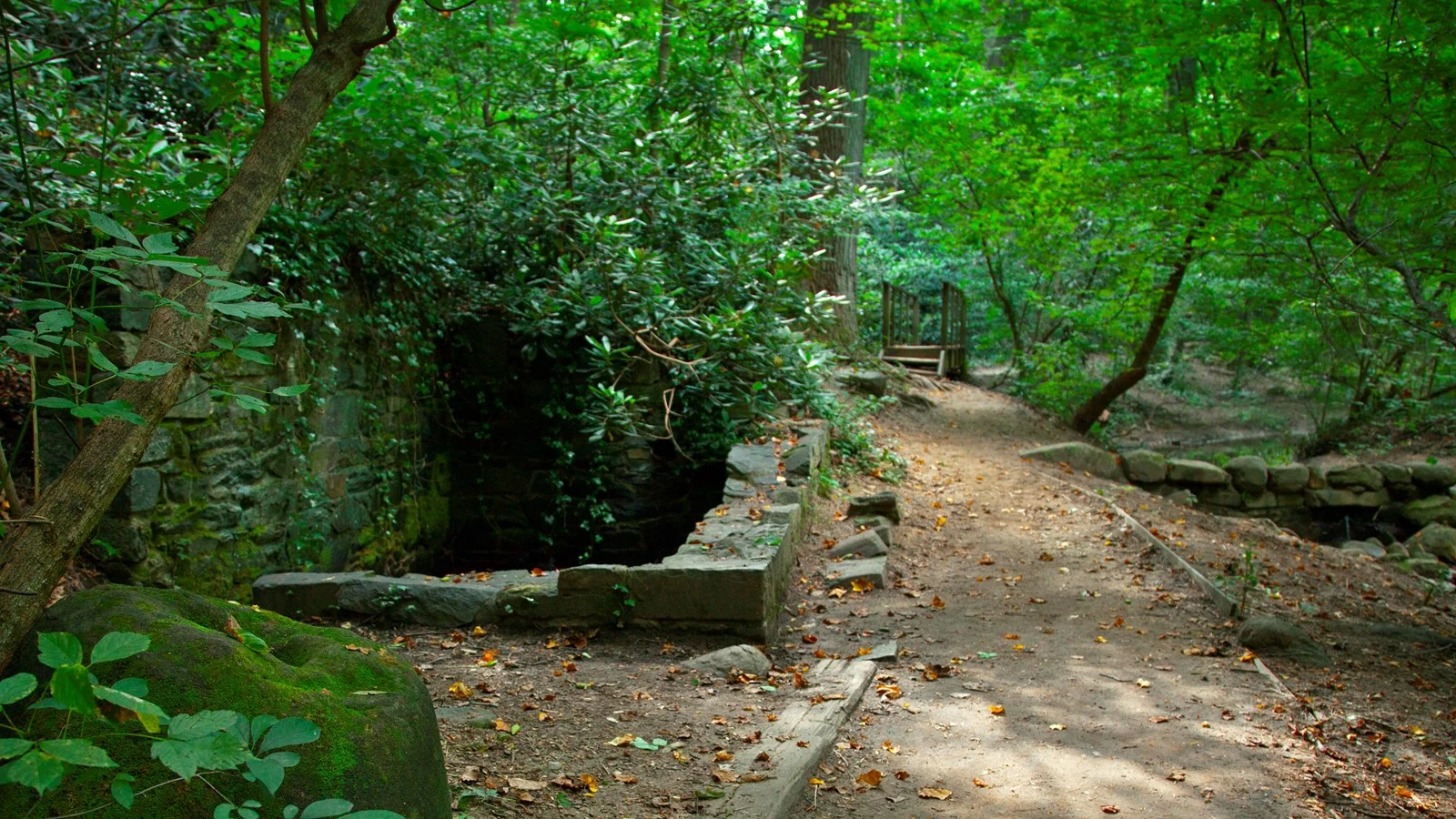
A designed landscape can appear most natural where its organisation is least immediately obvious. At Dumbarton Oaks Park in Washington, D.C., a woodland route carries the imprint of Beatrix Farrand’s work with Mildred and Robert Woods Bliss. A National Park Service walk announced for 21 November 2026 brings that authorship, and the continuing effort to recover its intentions, back into public view. 1
The free ranger-led programme is scheduled for 1 p.m., beginning at the park sign on R Street. The announcement describes a discussion of Farrand’s design philosophy, the landscape’s vulnerability and the work of the National Park Service and Dumbarton Oaks Park Conservancy. It offers a way to read the park through the decisions and care that have shaped it. 1
The distinction between park and garden is essential here. NPS identifies two principal parts of the larger Dumbarton Oaks landscape: the formal gardens maintained by Harvard University and the naturalistic garden that forms the public park. Farrand intended a connected design, with views from the upper gardens reaching into the woodland. The ranger walk concerns the park, rather than admission to Harvard’s formal garden terraces. 2
That relationship gives the wooded ground an architectural role. A view can make one area part of the experience of another, even when a visitor has not yet crossed its boundary. Paths and changes in level then turn a visual connection into a physical journey. The landscape can be understood through those transitions, rather than as a series of isolated scenic moments.
NPS credits Farrand’s collaboration with Mildred Bliss as central to the design. The ambition was to create a sense of country life within Georgetown. That historical purpose helps explain why naturalistic planting and constructed features need to be considered together: the impression of ease was itself designed. 2
For contemporary practice, the useful question is how to preserve such an intention while caring for living material. A path has a line and a surface; trees develop canopies; vegetation changes what remains visible. Stewardship requires repeated judgement about which relationships should endure and which forms of change belong to the life of the place.
The November programme provides a modest but valuable format for that discussion. Walking with a ranger can connect a historical design to the ground beneath a visitor’s feet. Farrand’s legacy becomes legible through the route, the surrounding vegetation and the work required to keep a public landscape available for return.