New address · Hôtel Lulu, Paris · Opened September 2026.
At 155 Boulevard du Montparnasse, Hôtel Lulu gives a compact Parisian hotel several public lives. The four-star property contains twenty-seven rooms, a coffee shop, a winter garden and a piano bar. Paris’s official tourism organisation lists its opening in September 2026, placing it among the capital’s recent hospitality arrivals. 1, 2
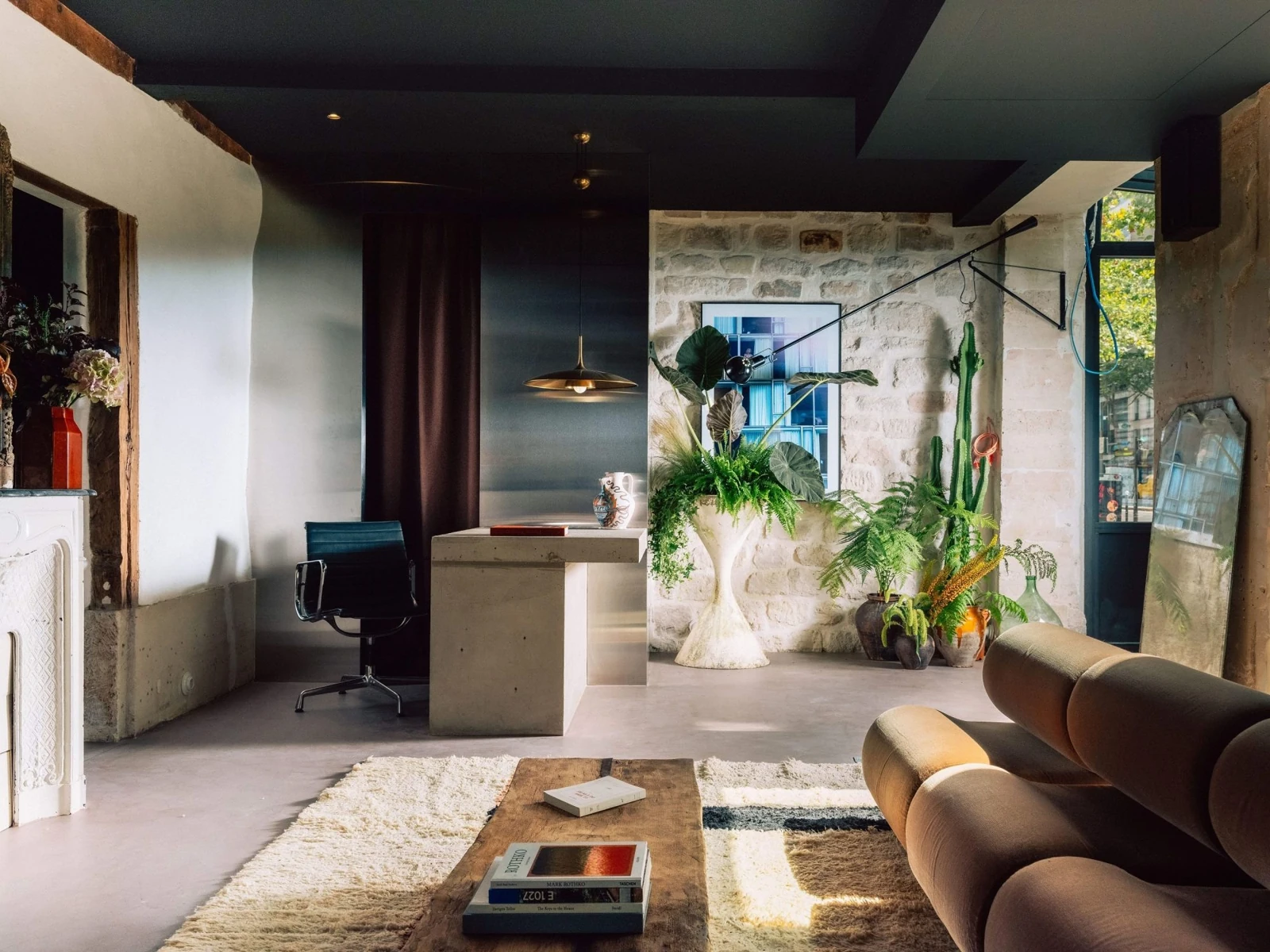
The interior design is by Vanessa Scoffier, whose earlier Hôtel Henriette established a different, more colourful domestic vocabulary. Recent reporting identifies Lulu as her next hotel project. Here, the published images and material descriptions place raw concrete, brushed stainless steel and vintage pieces alongside softer surfaces and collected objects. 3, 1
The hotel’s own account describes carpets, linen sheers, off-white walls and natural materials in the rooms. Bathrooms bring pink, green and blue mosaics into a scheme inspired by Mediterranean swimming pools. These choices introduce a shift in scale between the more public material language downstairs and the smaller, enclosed spaces used privately by guests. 1
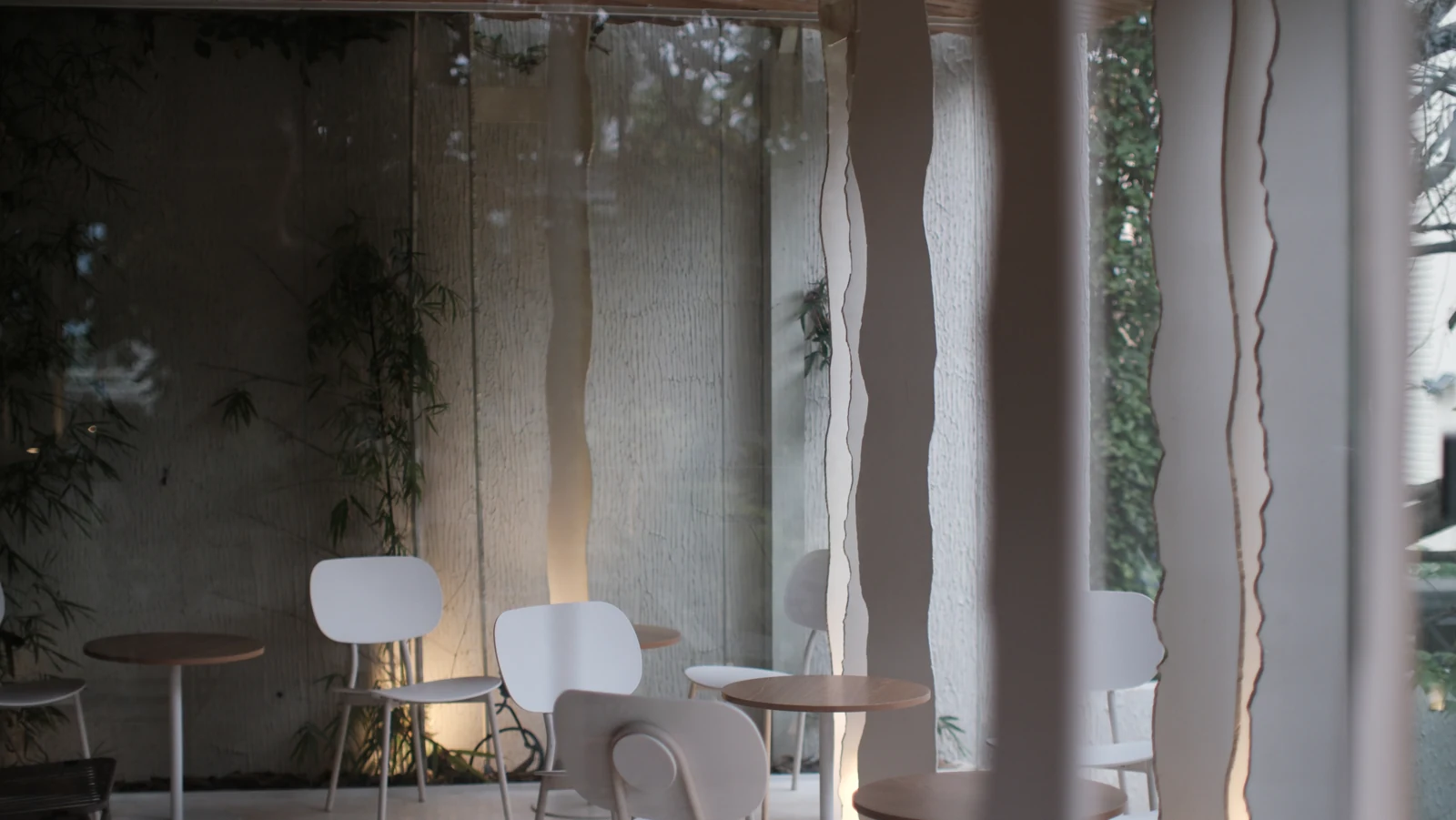
The most consequential design decision may be the programme under the glass roof. The winter garden is intended to support different uses as the day progresses, while the coffee shop is open to the neighbourhood. A morning arrival, a coffee in the afternoon and an evening around the piano can give the same address several different rhythms. 1
That sequence offers an editorial way to understand the interior. A space expected to change use needs enough continuity to remain recognisable and enough flexibility to accommodate different levels of activity. Light, furniture spacing and the relationship between a seated group and the circulation around it become as important as the individual pieces selected.
The official tourism description places exposed concrete and steel beside vintage furniture, while connecting the address to the artistic and literary history of the Left Bank. That relationship can be most interesting when it remains specific: an old object, a contemporary fitting and a visible material junction each bring a different time into the same room. 2
Lulu’s small scale makes its hospitality proposition easy to grasp. The guest room offers retreat; the shared spaces offer several reasons to remain downstairs. Its contribution to the neighbourhood will ultimately be made through use. For now, the published project proposes a clear spatial arrangement for that possibility, giving a hotel more than one way to receive people.