September cultural reading · An ongoing exhibition, not a September opening
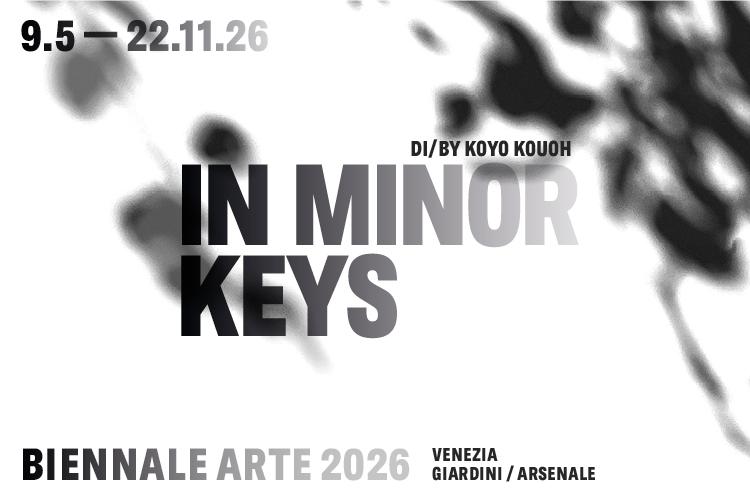
A biennial is usually introduced through scale: countries, artists, square meters, visitors. In Minor Keys proposes another register. Koyo Kouoh conceived the 61st International Art Exhibition around resonance, affinity, rest and the quieter frequencies through which practices can recognize one another across distance.
The exhibition opened on May 9 and continues through November 22, 2026 at the Giardini, Arsenale and sites across Venice. Its 110 invited participants include individual artists, duos, collectives and artist-led organizations from geographies as varied as Dakar, Salvador, San Juan, Beirut, Paris and Nashville.
At a glance
- Subject
- Art & Culture
- Editorial series
- Special Story
- Story format
- Feature / Special Story
- Published
- September 1, 2026
- Reading time
- 7 min read
Kouoh died unexpectedly in May 2025, after establishing the theoretical framework, selecting artists and works, commissioning the catalogue, defining the graphic identity and shaping the exhibition architecture. La Biennale continued the project with the support of her family and the team she had chosen: Gabe Beckhurst Feijoo, Marie Hélène Pereira, Rasha Salti, Siddhartha Mitter and Rory Tsapayi.
That continuation raises a profound curatorial question. How can an institution realize a person’s vision without converting it into a memorial object or claiming certainty where dialogue would have continued? The team’s work treats authorship as relational. They do not impersonate Kouoh; they carry forward the structures of trust, conversation and attention she had already built.
The exhibition avoids fixed sections. Motifs move beneath it like recurring musical phrases: shrines devoted to lodestar artists, processions, enchantment, spaces of physical and spiritual rest, and schools in which artist-led institution-building directs resources toward social purpose. The sequence is composed through undercurrents rather than categories.
Kouoh died unexpectedly in May 2025, after establishing the theoretical framework, selecting artists and works, commissioning the catalogue, defining the graphic identity and shaping the exhibition architecture.
Two shrines honor Issa Samb and Beverly Buchanan, artists whose practices joined material invention to forms of world-making that exceed the conventional retrospective. Their presence establishes lineage without turning influence into a family tree. Artists elsewhere in the exhibition meet through shared pressures and sensibilities, not because a map declares them adjacent.
Literature supplies another layer. Toni Morrison’s Beloved and Gabriel García Márquez’s One Hundred Years of Solitude informed the curatorial process through their treatment of memory, thresholds and magical realism. These references do not become themes illustrated by artworks; they help establish an emotional temperature in which the visible world is understood to contain other temporalities.
The catalogue extends the method. Artists proposed writers for their own practices, producing more than 100 commissioned voices and giving process images, sketches and studio material substantial space. Documentation becomes part of the exhibition’s ethics: knowledge is produced near the work rather than delivered only by a distant institutional narrator.
Venice remains a place of national pavilions, professional hierarchy and concentrated global attention. In Minor Keys does not dissolve those structures. Its quieter proposition is to tune the central exhibition differently—to privilege relation over representation, sustained practices over novelty and listening over the curatorial voice that explains everything first.
The title should not be mistaken for modest scale. A minor key can carry grief, tension, beauty and unresolved movement with enormous force. Kouoh’s final exhibition asks the Biennale to lower its volume long enough for those forces to be heard—and allows collective stewardship, rather than institutional completion, to become part of the work.