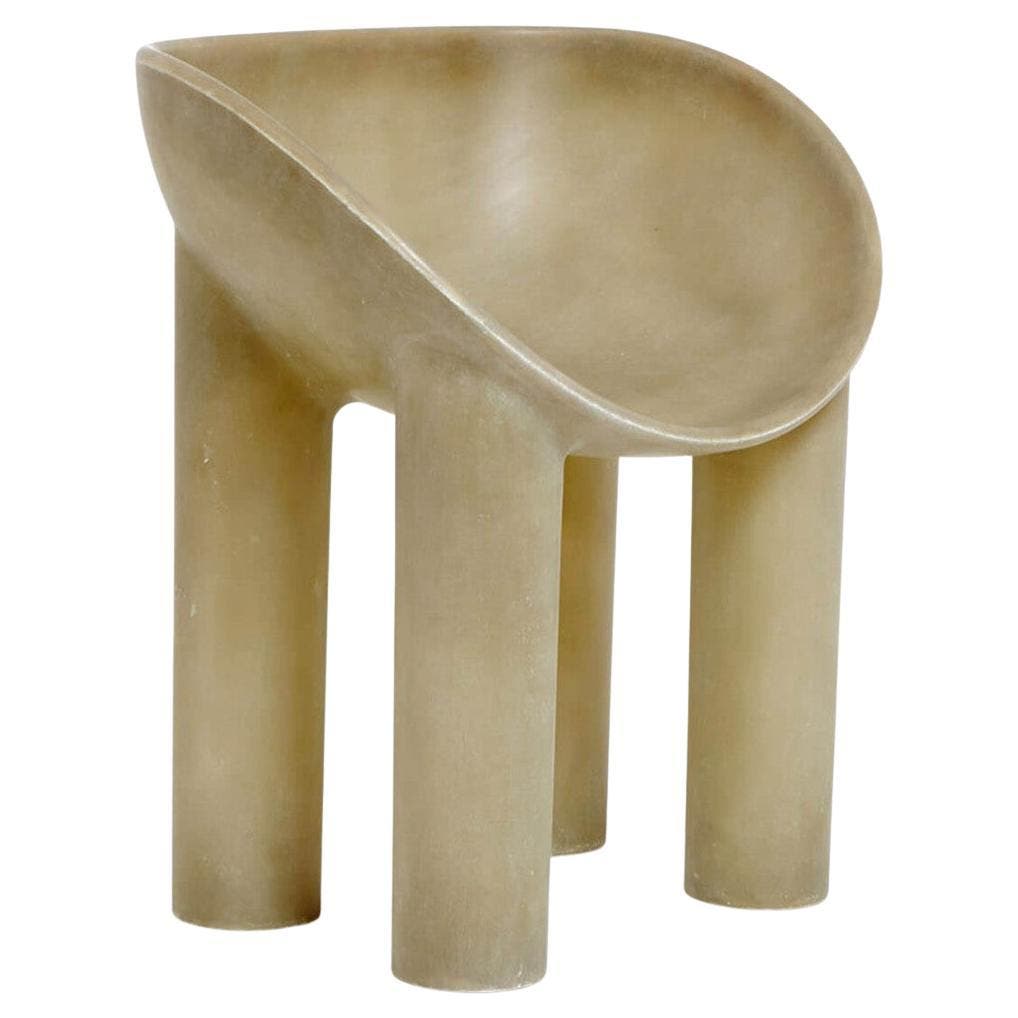
Faye Toogood works at the boundary between functional object and sculpture. Her studio moves across furniture, interiors, clothing and art, yet the work is connected by a tactile vocabulary rooted in landscape, found forms and the expressive potential of materials.
Before founding her studio in 2008, Toogood worked in the editorial world. That training remains visible in the way projects are assembled: objects rarely appear as isolated products, but as characters within a larger material story.
At a glance
- Subject
- Objects
- Editorial series
- Material Intelligence
- Story format
- Profile / Visit
- Published
- August 2, 2026
- Reading time
- 4 min read
Her practice suggests that coherence does not require a narrow category. It can come from a consistent way of observing, editing and giving unfamiliar form to ordinary human needs.
Toogood’s editorial background matters because editing is itself a design act: selecting, sequencing and establishing relationships among things. Her assemblages give each body of work its own vocabulary without severing it from the larger practice.
Across disciplines, materials retain a sense of physical origin. Stone, timber, clay and textile are allowed to feel weighty, irregular or protective. For a multidisciplinary studio, the lesson is to build continuity through sensibility rather than sameness.
Her practice suggests that coherence does not require a narrow category.
The Roly-Poly chair is instructive because its familiarity came from an unusually direct silhouette. Its deep seat and substantial legs make comfort visible before the object is touched, while its scale gives it the presence of sculpture. Recognition emerged from the clarity of one idea rather than the accumulation of detail.
Toogood often develops work through named assemblages, a structure that frames design as an evolving body of research. Each collection can test a different emotional territory while remaining connected to the same authorial intelligence.
The useful lesson is freedom with discipline. Crossing categories becomes convincing when every move is grounded in observation, material knowledge and an ability to edit. The practice can change its output without losing its point of view.
Materials are never neutral. Their sourcing, behavior, fabrication and aging shape both the experience of an object and the values it carries.