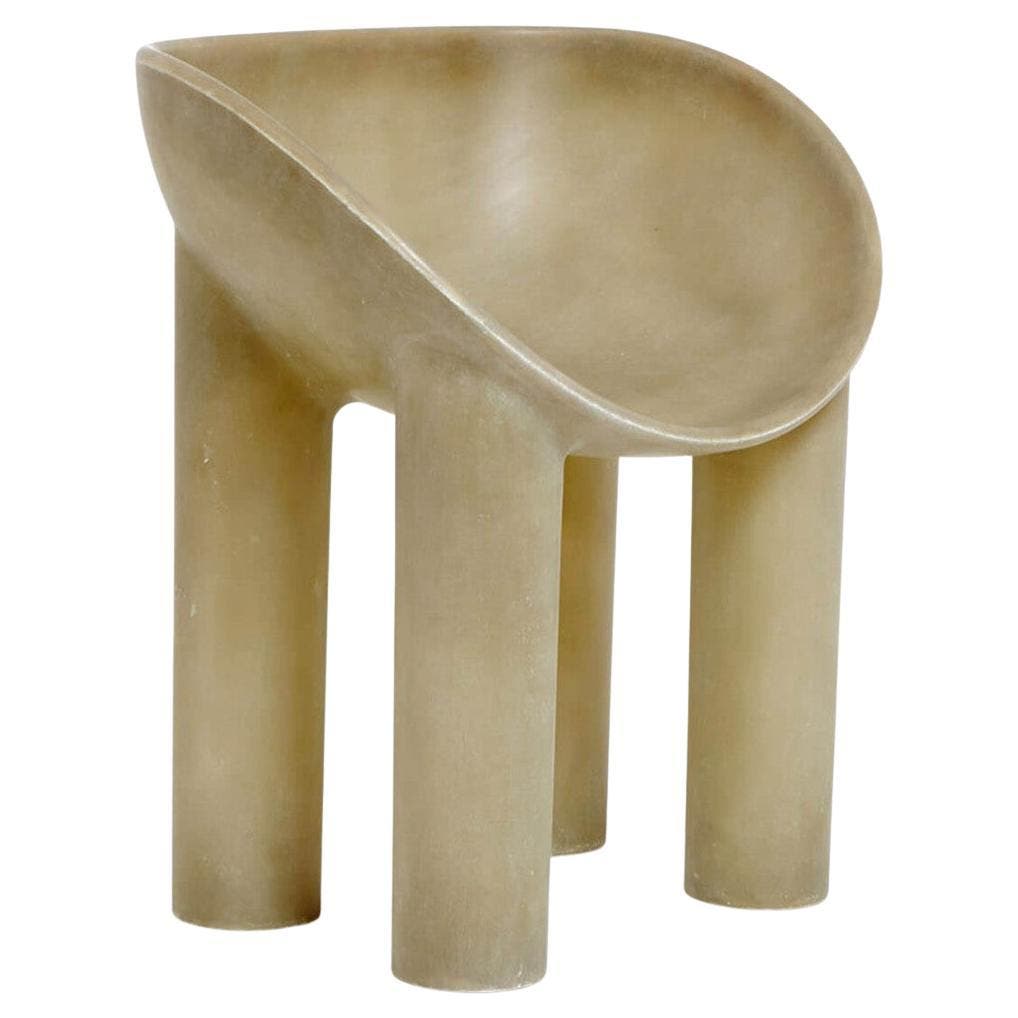
Simplicity is one of design’s most misleading words. It can describe an object with few parts, a surface without ornament or an experience in which every difficulty has been resolved before reaching the user. In Pauline Deltour’s work, simplicity was never the absence of decisions. It was the visible result of discipline.
Pauline Deltour: An Apparent Simplicity, at the Musée des Arts décoratifs et du Design in Bordeaux through September 21, 2026, is the first retrospective devoted to the French designer. Approximately 180 objects and studies span a decade of work, allowing the museum to show not only finished products but the persistent refinement behind them.
At a glance
- Subject
- Objects
- Editorial series
- Material Intelligence
- Story format
- Profile / Visit
- Published
- September 2, 2026
- Reading time
- 4 min read
Deltour, who died in 2021 at the age of 38, moved between furniture, lighting, jewelry, accessories and domestic objects. That range did not produce a collection of signatures applied to different categories. Her coherence came from proportion, construction and the desire to remove whatever prevented an object from being clearly understood or comfortably used.
The exhibition’s setting sharpens that reading. Works occupy former prison cells and courtyards within the museum, with scenography by designer Konstantin Grcic and graphic designer Caroline Perret. The contrast between compact historic rooms and exact contemporary objects makes restraint feel spatial rather than merely stylistic.
A retrospective can easily turn process into mythology, especially when a career ended too early. Here, the quantity of material offers a more grounded account. Drawings, prototypes and variations reveal that an apparently inevitable line is usually selected from many plausible ones. Precision is built through comparison.
Deltour, who died in 2021 at the age of 38, moved between furniture, lighting, jewelry, accessories and domestic objects.
Deltour’s collaborations with manufacturers are central to that process. Industrial design lives between authorship and production: a material has limits, a factory has tools, a price point has consequences and an object must survive repetition. The designer’s work is not diminished by those constraints. It becomes legible through how intelligently they are negotiated.
This is why her objects avoid the coldness sometimes associated with reduction. Edges, handles, joints and surfaces are calibrated to the body. Lightness does not mean fragility, and utility does not suppress character. The work feels quiet because it does not ask form to perform an identity that construction cannot support.
The exhibition also offers a corrective to the speed of contemporary image culture. A small object photographed on white can appear self-explanatory and interchangeable. Seen across prototypes and neighboring projects, its exact decisions reappear: where a curve begins, how two materials meet and which gesture has been deliberately withheld.
For younger practices, Deltour’s career demonstrates that a recognizable language can be made from method rather than spectacle. Consistency does not require repeating a silhouette. It can emerge from recurring standards—clarity, economy, tactility and respect for the intelligence of both maker and user.
Materials are never neutral. Their sourcing, behavior, fabrication and aging shape both the experience of an object and the values it carries.
An Apparent Simplicity is a precise title because the exhibition restores the labor hidden by ease. The objects do not advertise how hard they were to resolve. They let that work disappear into use. The retrospective makes it visible again, not to complicate the designs, but to show why their calm has substance.