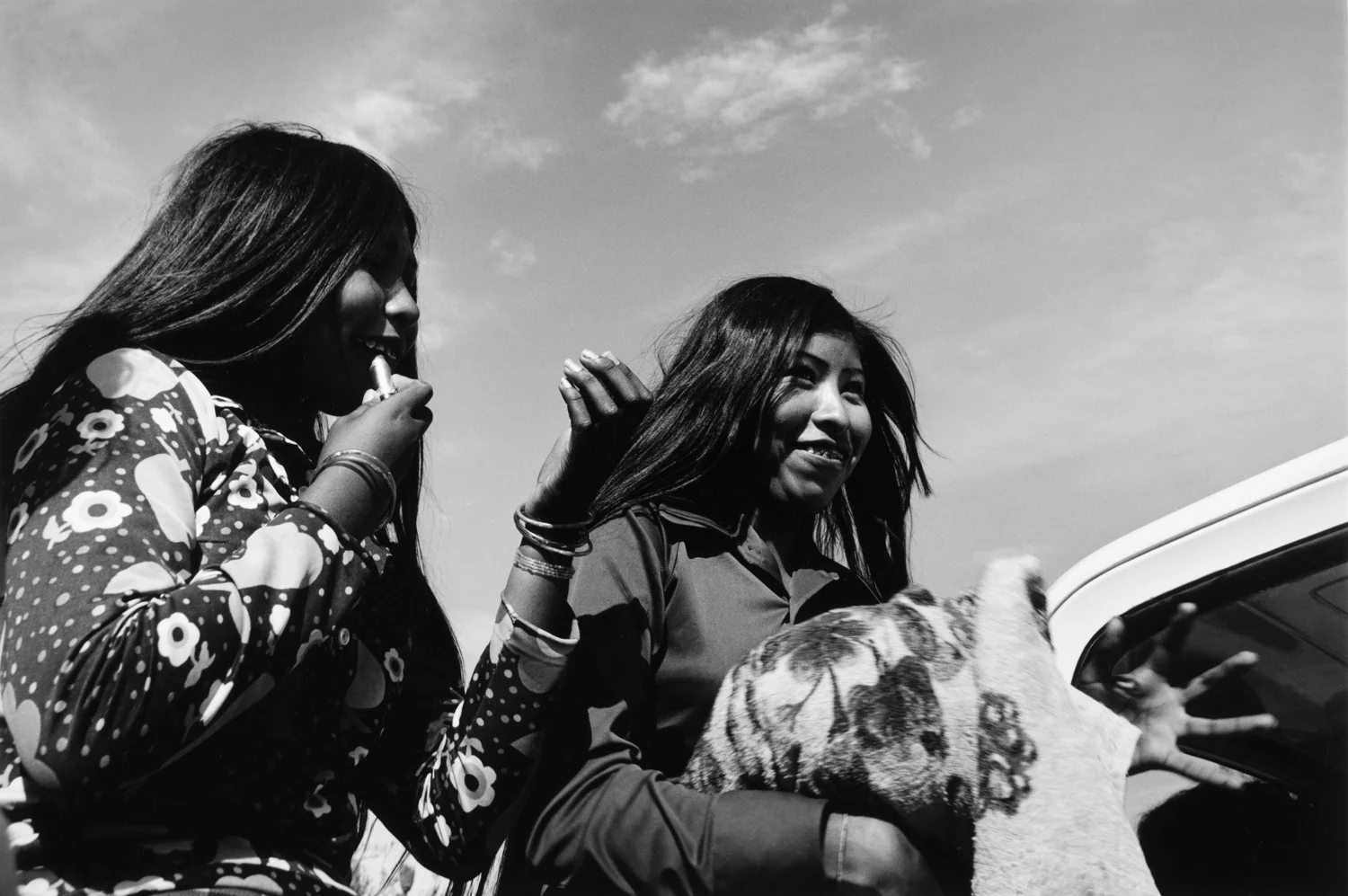
Graciela Iturbide received the Leica Hall of Fame Award at Leica World in Wetzlar on October 8, 2026. An accompanying exhibition at Leica Gallery Wetzlar brings together more than fifty photographs from five series and is scheduled to remain on view until January 2027. The occasion offers a focused way to revisit a practice built through sustained attention to everyday life, ritual and place. 1
The selection comprises Juchitán, México Clásicas, Pájaros, Desierto de Sonora and Viajes, placing five distinct bodies of work within a single exhibition. 1
Iturbide’s route to photography began with film studies in Mexico City in 1969. She subsequently assisted Manuel Álvarez Bravo in 1970–71, accompanying him on journeys through Mexico. In 1979, Francisco Toledo invited her to photograph in Juchitán, Oaxaca. The resulting body of work continued through 1988 and became the book Juchitán de las Mujeres in 1989. That chronology places the work within a long process of return and selection. 2
One image from that project, Nuestra Señora de las iguanas, was made in 1979. Fundación MAPFRE’s collection record identifies its subject as Sobeida Díaz, a woman who sold iguanas at the market, and records the work as a gelatin silver print on baryta paper. The factual identity of the sitter remains essential beside the image’s suggestive title. Naming her anchors interpretation in a person and a livelihood, keeping the photograph connected to the world in which it was made. 3
The collection record also brings the photograph back to its physical support. A gelatin silver print has a particular surface and relationship to light, while the same image in a book becomes part of a sequence of pages. Iturbide’s photographs circulate in these different forms. The Wetzlar exhibition offers a setting in which to consider the individual picture alongside the series that gives it context, bringing the act of looking back to the work around a familiar image.
Leica selected Na’ Lupe Pan, photographed in Oaxaca in 1986, as its Picture of the Year for 2026. That decision places another work from the Juchitán series in circulation this October. It also returns attention to the larger sequence around it. A photograph may become familiar very quickly; understanding the work from which it comes requires a slower adjustment, moving between the distinct image, the person represented and the years that brought the series into being. 1