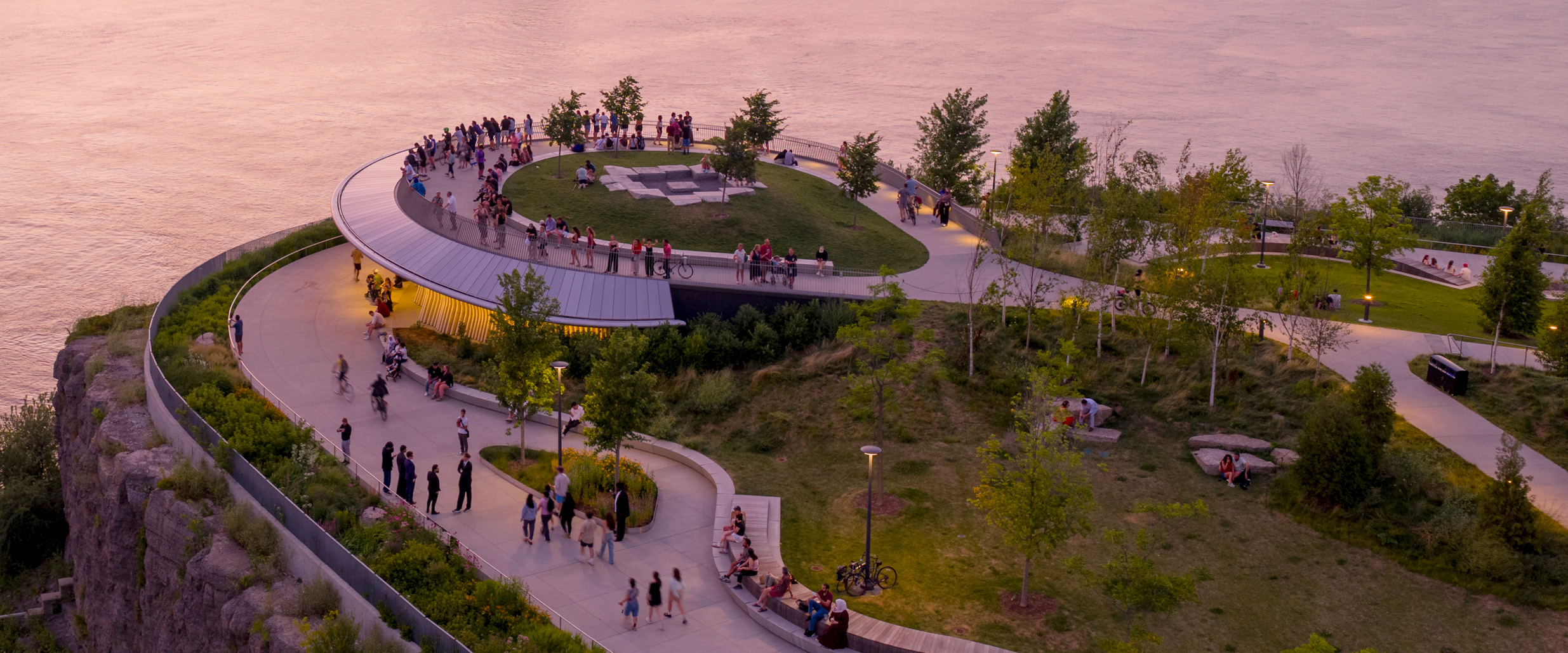
Julie Bargmann founded D.I.R.T. studio in 1992 to research, design and build regenerative landscapes. Her practice concentrates on places marked by extraction, industry and abandonment—the sites conventional ideas of beauty often prefer to conceal.
Instead of wiping the land clean, Bargmann treats existing structures, rubble, contamination and memory as design evidence. Scientific remediation and material reuse operate alongside public access and new forms of landscape experience.
At a glance
- Subject
- Landscape
- Editorial series
- Material Intelligence
- Story format
- Profile / Visit
- Published
- August 1, 2026
- Reading time
- 4 min read
The work offers an unusually honest definition of renewal. A productive future does not require pretending damage never occurred; it can begin by understanding what remains and designing the next life of the place from that knowledge.
Post-industrial sites carry hazards, labor histories and community identities. Erasing every trace can produce a clean surface while removing the evidence needed to understand the place.
D.I.R.T. studio’s collaborations with scientists, engineers and communities turn remediation into design. Reused structures give renewed landscapes material continuity, so visitors perceive transformation rather than a fictional return to untouched nature.
The work offers an unusually honest definition of renewal.
At former mines, factories and industrial campuses, the first design act is forensic. The team studies water, soil, structures and patterns of use to understand which conditions must be treated and which traces can remain legible.
Salvaged material becomes more than an environmental calculation. Concrete, brick and rusted metal can preserve the physical language of work while being reorganized for public life, habitat and new forms of occupation.
Bargmann’s landscapes reject easy redemption stories. Their optimism is credible because it does not hide damage. Renewal becomes a visible process—one capable of producing ecological value while respecting the difficult histories already embedded in the ground.
Materials are never neutral. Their sourcing, behavior, fabrication and aging shape both the experience of an object and the values it carries.