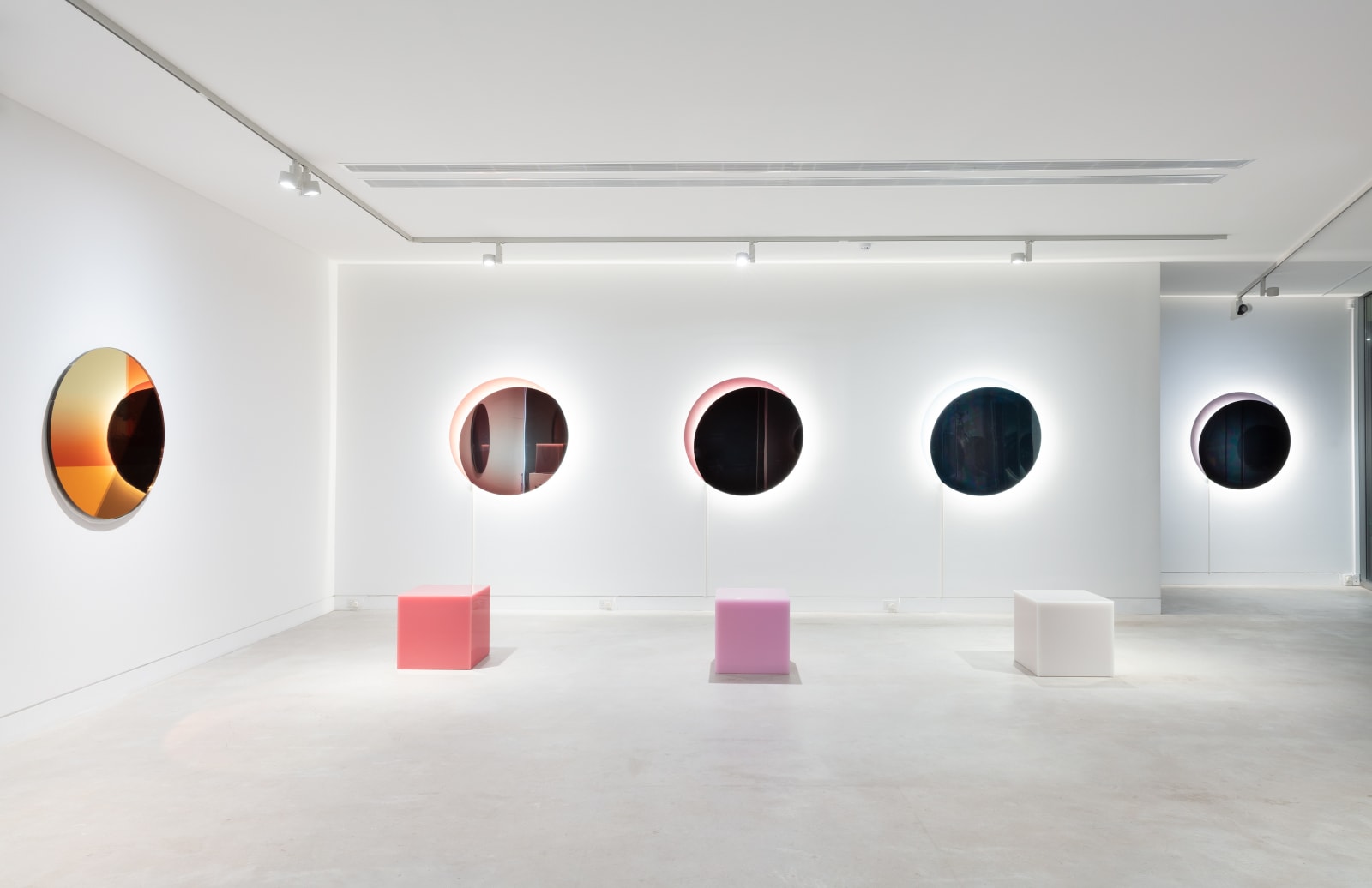
Sabine Marcelis describes her work as a search for magical moments within materials. From her Rotterdam studio, she develops objects and installations in which resin, glass, stone and metal are used to hold, filter or redirect light.
The apparent simplicity of the forms is supported by close technical collaboration with manufacturers. Edges, gradients and polished surfaces are calibrated so that a static object changes with the viewer’s position and the conditions around it.
At a glance
- Subject
- Objects
- Editorial series
- Material Intelligence
- Story format
- Profile / Visit
- Published
- August 2, 2026
- Reading time
- 4 min read
Marcelis demonstrates that minimal form need not produce a minimal experience. When material behavior is understood deeply enough, a single volume can contain movement, atmosphere and surprise.
Light is not applied after form is resolved. Thickness, transparency and surface determine how color travels, where an edge appears to dissolve and when a reflection activates the room.
Her clarity depends on prototypes and specialist fabrication. The larger principle is precision in service of wonder: technical control is most powerful when it disappears into an experience that feels immediate and slightly impossible.
Marcelis demonstrates that minimal form need not produce a minimal experience.
Resin has become closely associated with Marcelis because it can hold color with unusual depth. Yet the work is not a formula built around one substance. Glass, stone, metal and lacquer enter the practice when their optical or tactile behavior can advance the idea.
At an architectural scale, mirrored and translucent elements make the viewer part of the composition. Bodies, weather and surrounding buildings are reflected, fragmented or tinted, so the work never appears exactly the same twice.
This responsiveness gives minimalism an emotional charge. The forms remain economical, but the experience is generous. Marcelis shows that reduction can intensify perception when every edge and surface has a specific role.
Materials are never neutral. Their sourcing, behavior, fabrication and aging shape both the experience of an object and the values it carries.