The Hirshhorn Sculpture Garden is scheduled to reopen to the public on 31 October 2026, with an opening weekend of activities and artist conversations. For a landscape positioned on Washington’s National Mall, the occasion will bring a renewed question into view: how can a museum garden make its collection part of the everyday movement of the city? 1
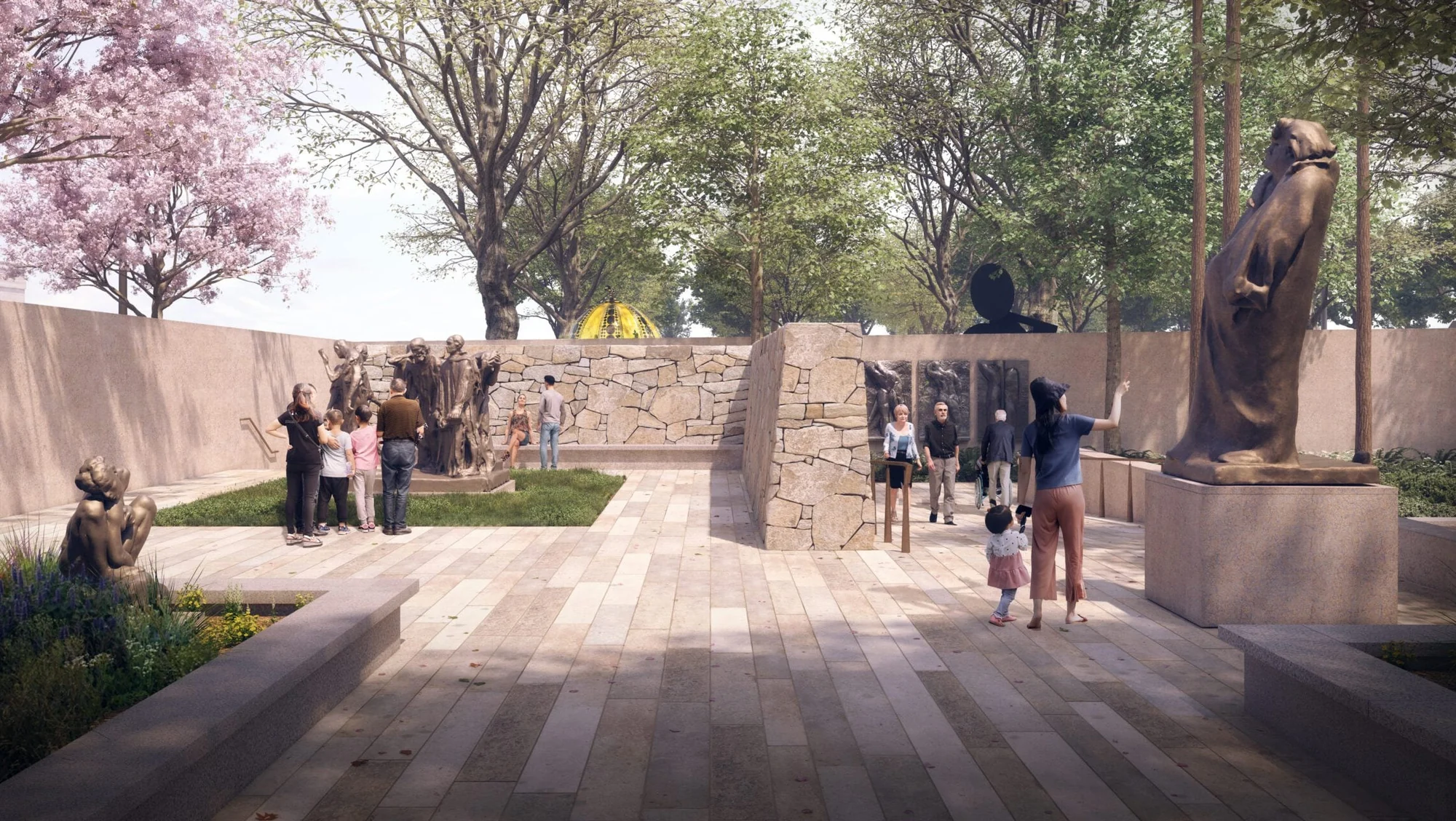
Hiroshi Sugimoto’s design follows a four-year transformation of the 1.3-acre site. The museum describes a landscape with nearly sixty sculptures and almost 30,000 new trees and plants. The programme therefore involves several overlapping forms of growth: the living landscape, the collection and the ways visitors will be able to move through them. 2
The restoration of the underground connection between the garden and museum plaza gives the project a clear spatial purpose. Quinn Evans, architect of record, identifies reconnection with the National Mall and an expanded setting for performance as central ambitions of the work. A route recovered from Gordon Bunshaft’s original design becomes part of a contemporary visitor experience. 3, 4
That connection has implications beyond convenience. A museum visit can acquire a different rhythm when an outdoor space belongs to a continuous route. Leaving the galleries may become another stage of looking, with changes in light, temperature and distance affecting the encounter. The return journey can give familiar works a different context.
The new plan uses dry-stacked stone walls to define areas of the garden. It also provides five entrances, wider ramps and additional seating and shade. These elements establish the practical conditions for an extended visit: places to enter, pause, orient oneself and approach individual works from more than one direction. 2
Within the Central Garden, an enlarged water feature can be filled or drained, allowing the area to support reflection, seating and performances. 2 The change introduces a useful flexibility. A single portion of landscape can accommodate both an individual encounter with art and a gathering with a different scale and tempo.
The opening programme makes that public ambition concrete. Alongside art-making activities, the museum has scheduled conversations with Yoshitomo Nara, Chatchai Puipia, Raven Halfmoon and Pedro Reyes. Nara’s Sentinels of Stillness will inaugurate the West Lawn exhibition space. 1 The landscape’s first public weekend will therefore include artists’ voices as well as their work.
Quinn Evans’ role in documenting and realising the design also makes clear the collaborative labour behind the project. 3 Such a landscape depends on the coordination of an artistic vision with the ordinary requirements of movement, maintenance and public use.
The garden’s next chapter will begin with people entering it. The most telling measure of the redesign will be how those visitors establish their own routes and places to linger: a shaded seat, a view across planting, a return to a sculpture encountered earlier. The renewed connections give those possibilities a physical framework.