The Webster Covent Garden announced its opening on 8 October 2026, introducing a new hotel brand beside Lincoln’s Inn Fields. With 167 rooms, the property brings reading, dining and gathering into the same address. Its first impression is shaped by a familiar urban question: how can a hotel give visitors a place within the daily life of its neighbourhood? 1
Red Deer’s project account traces the building’s conversion from Club Quarters Covent Garden. The work involved the guestrooms, public areas and lounge, together with a restaurant and a late-night bar in the basement. The courtyard facing Lincoln’s Inn Fields was also reworked to connect outdoor seating with the interior bar. 2
This sequence gives the public spaces several relationships to the city. A terrace can receive someone arriving for coffee without requiring the same commitment as an evening meal. A lounge allows a guest to spend time between planned activities. A lower-ground venue establishes a different mood and pace. The success of the arrangement will rest on how clearly each space supports its own use.
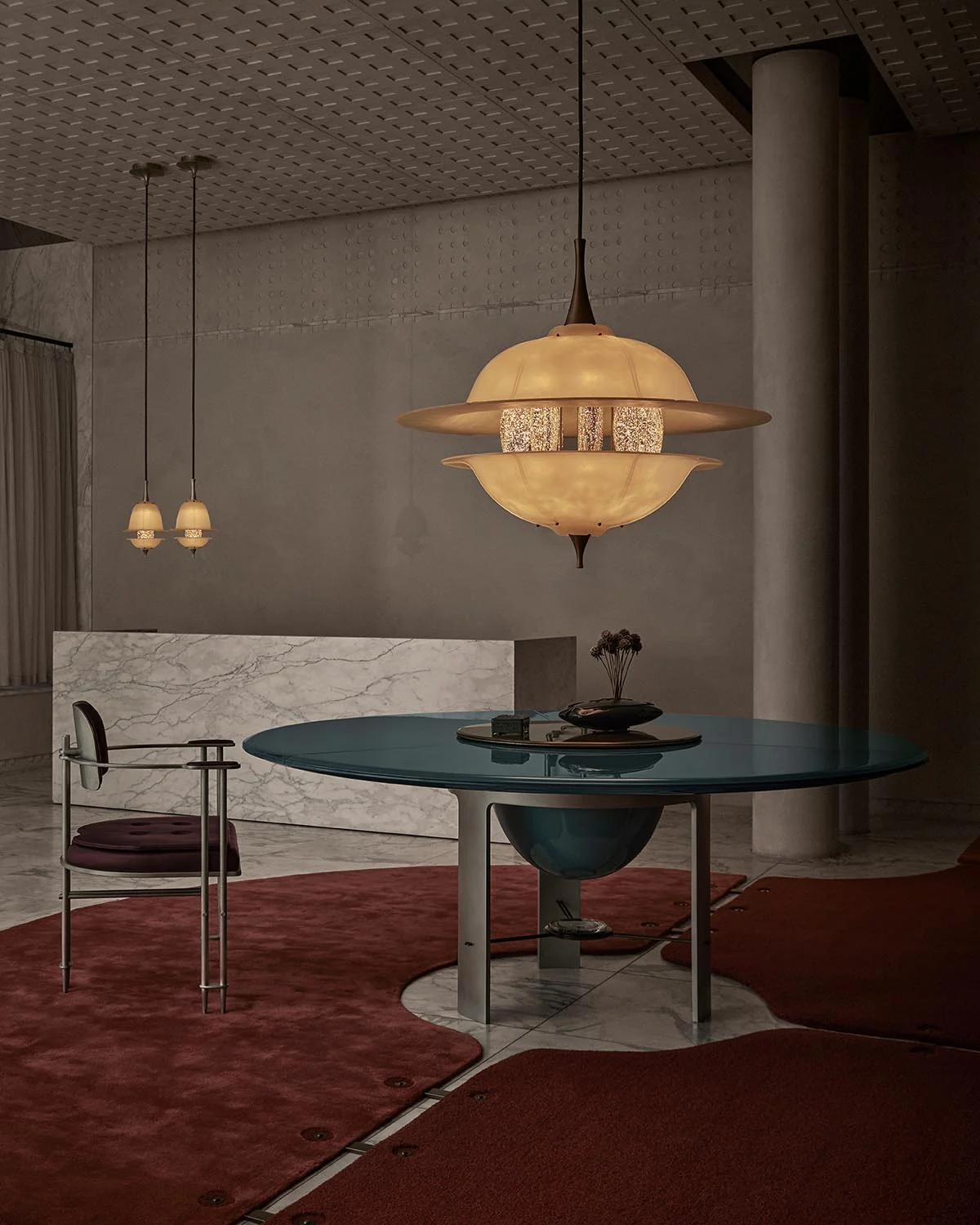
The material palette helps distinguish those settings. Red Deer describes bespoke terrazzo flooring and a lounge organised around generous sofas and a library area. Its account of the basement bar includes low lighting, red velvet and a hammered gold-toned bar. These choices create opportunities for changes in texture and light as guests move through the building. 2
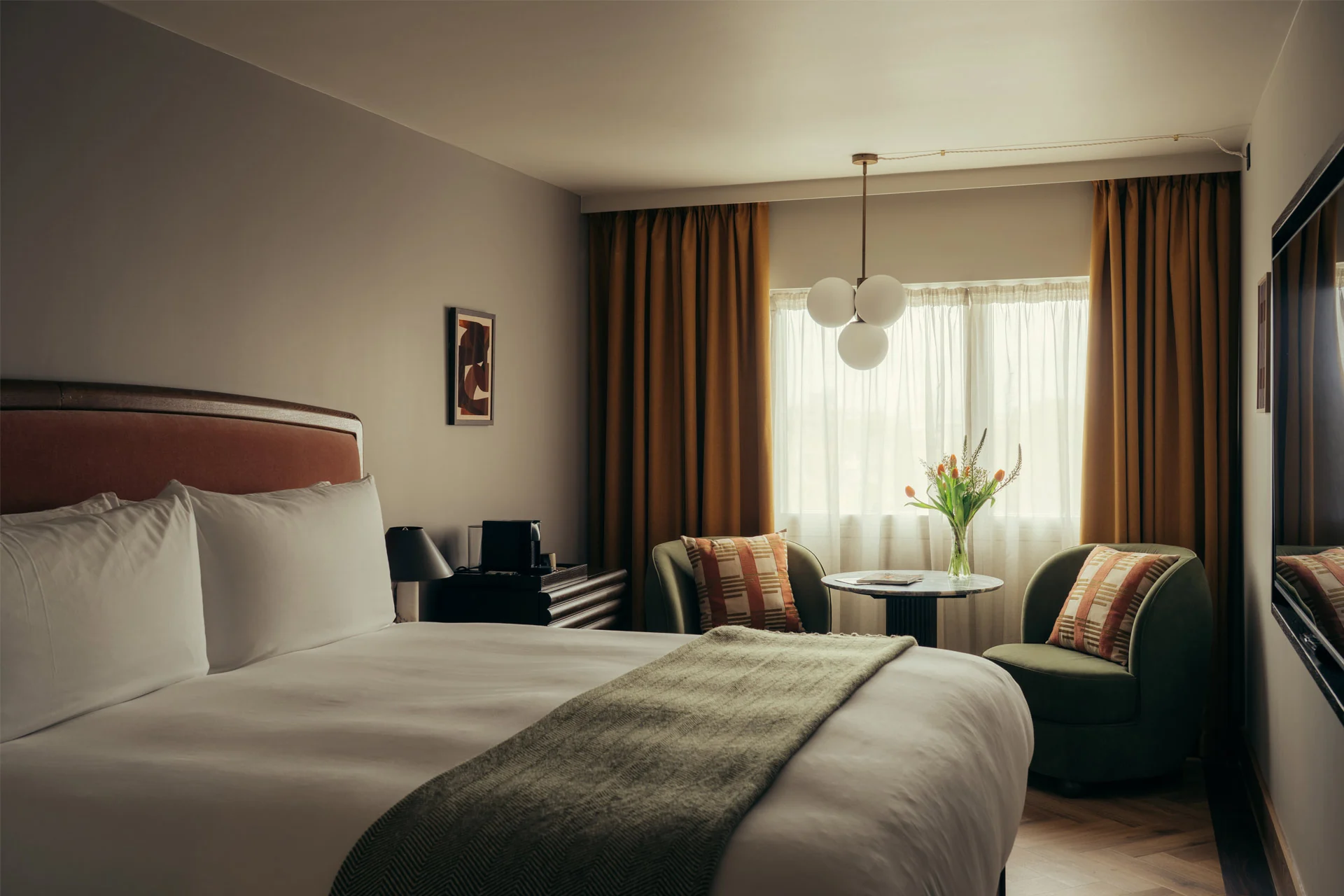
In the rooms, the hotel's opening announcement identifies terracotta, oxblood and off-white tones, alongside wool rugs and brass and alabaster lighting. Books and radios form part of the room setting. 1 Such objects can give a guest an immediate, modest way to occupy a room, with activities that require little preparation.
The literary theme also extends into the shared amenities. The hotel describes a guest book, postcards and a letter-writing station in the lounge, as well as a bookshelf where guests can exchange books. Its cultural programme is intended to bring writers, musicians, artists and designers together. 3
These gestures are most convincing when their spatial support is equally considered. Reading calls for a comfortable seat and sufficient light. Writing requires a surface that is easy to use. Conversation benefits from furniture arranged at an appropriate distance. The quieter parts of the hotel will reveal how consistently the larger narrative has been carried into those details.
The Webster’s first address gives these activities a place within an existing building. Its identity takes shape in the connections between the guestroom, library, dining spaces and courtyard. The literary references are most useful where they encourage a guest to spend time: to pick up a book, write a note or settle into a conversation beside the square.