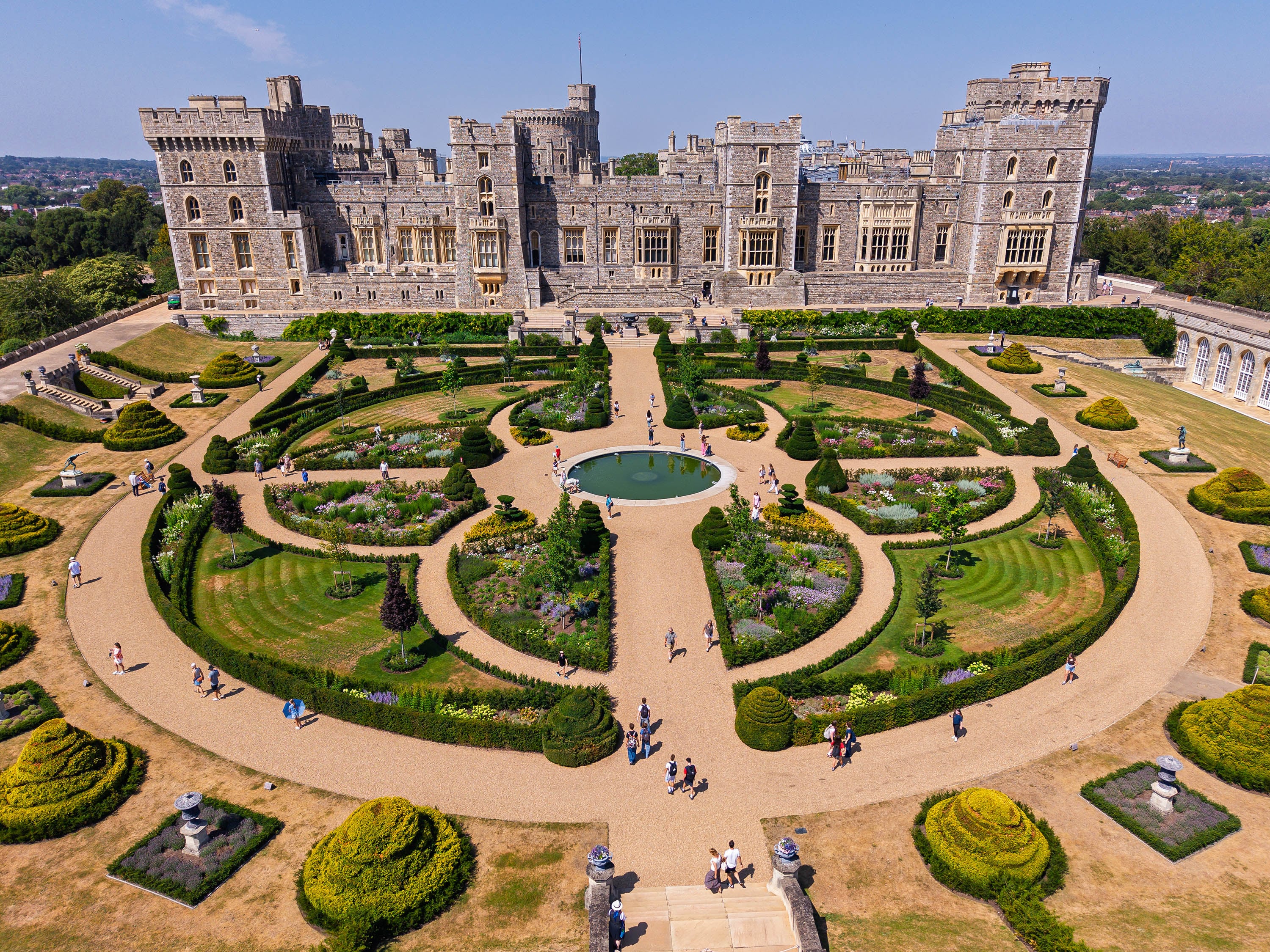
The geometry of a formal garden usually appears fixed: an axis, a hedge, a path and a view held in deliberate alignment. The new Venus Garden at Windsor Castle begins with a pattern that only becomes visible through time—the orbit traced by Venus over eight years.
Formerly known as the East Terrace Garden, the redesigned landscape opened to visitors on July 16, 2026. Its paths and planted forms translate the planet’s petal-like orbital figure into a ground-level route, allowing astronomical movement to become something visitors experience by walking.
At a glance
- Subject
- Landscape
- Editorial series
- Field Notes
- Story format
- Brief
- Published
- July 16, 2026
- Reading time
- 2 min read
Perennial beds sit within evergreen hedges, while formal planting meets wildflower meadows and sculpted yew. Ornamental pear, dogwood and crab apple introduce seasonal change. The composition preserves the discipline expected beside a royal castle while expanding habitat and food for pollinators.
Sculpture makes the garden’s time scale more complex. Four bronzes by Hubert Le Sueur, produced for Charles I in the 1630s, are placed within a landscape completed nearly four centuries later. Their presence avoids the fiction that heritage belongs to one finished historical moment.
The garden is most persuasive where its concept remains legible without explanation. A planetary diagram can easily become a curatorial story imposed on conventional planting. Here, the orbit organizes actual movement, while repeated flowering and leaf cycles allow visitors to understand change through the body.
Perennial beds sit within evergreen hedges, while formal planting meets wildflower meadows and sculpted yew.
Venus Garden demonstrates that a historic landscape can accept a contemporary layer without surrendering formality. It does not replace the language of the castle garden; it gives that language another source of order—one measured by celestial recurrence rather than architectural symmetry alone.
Temporary events often reveal larger changes in how art, design and public space are being produced and experienced. Recording them gives a short-lived moment a longer context.


